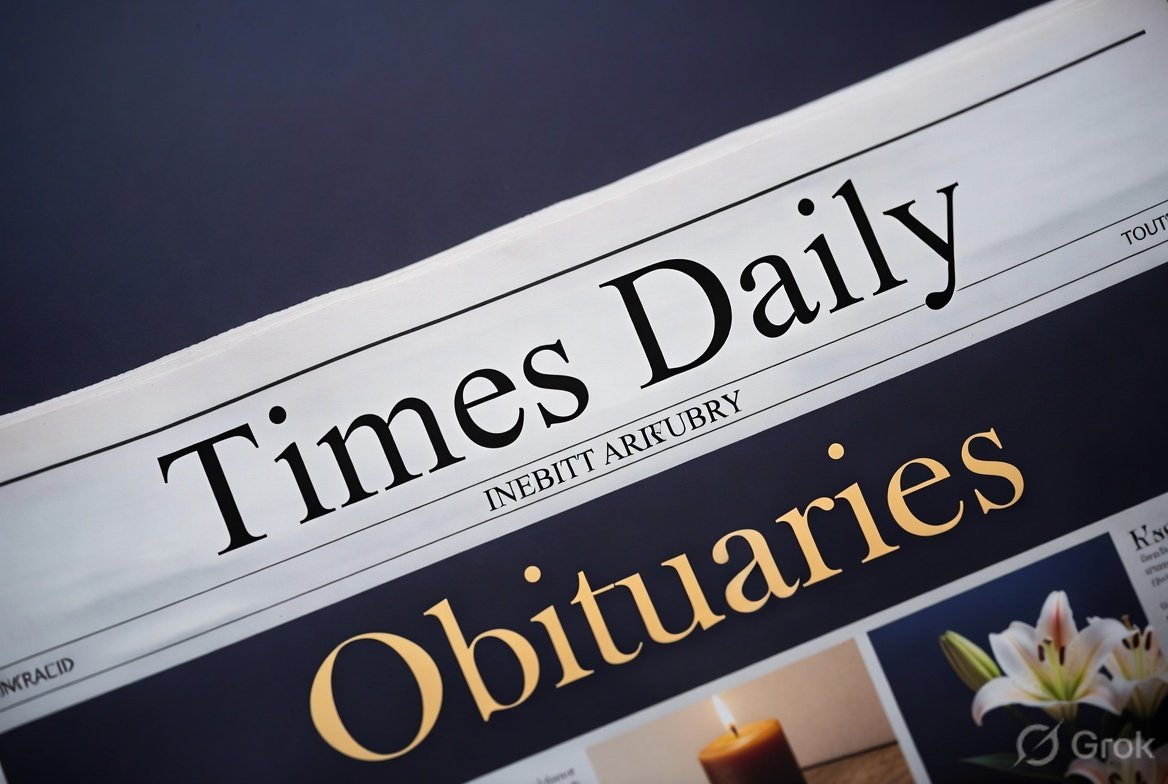

Obituaries have an important place in local communities. They announce a death, provide funeral information, recognize a person’s life, and help friends or distant relatives learn about a loss. Older obituary notices can also become valuable records for family history research.
Times Daily obituaries are commonly searched by readers looking for death notices connected with Florence, Alabama, and surrounding communities. People may want to find a recent notice, confirm service information, research an ancestor, or locate an older family record.
What Are Times Daily Obituaries
TimesDaily is a newspaper based in Florence, Alabama.
Its coverage is associated with the Shoals and surrounding regional communities.
Obituary notices form part of the local information readers may search.
A notice can identify a deceased person.
Funeral details may be included.
Family information can also appear.
| Detail | Information |
|---|---|
| Newspaper | TimesDaily |
| Main location | Florence, Alabama |
| Content type | Local and regional news |
| Obituary use | Death and memorial information |
| Archive coverage | Historical and current articles |
| Research value | Family and local history |
| Search methods | Name, date and keywords |
| Important step | Verify details before acting |
The information available can differ between individual notices.
Why People Search TimesDaily Obituaries
People search obituaries for many reasons.
A friend may hear about a recent death.
Former coworkers may want service information.
Classmates can search for an old friend.
Family members may be researching relatives.
Genealogists often use historical newspaper records.
Some readers simply want to remember an important member of their local community.
Finding a Recent Obituary
Start with the person’s complete name.
Correct spelling is important.
A middle name may improve the search.
Nicknames can also be useful.
Consider the approximate date of death.
The city or community can help narrow results.
If a notice is not immediately visible, try a broader search.
Search by First and Last Name
A complete name is usually a good starting point.
Enter the first name.
Add the last name.
A middle initial can help distinguish people with similar names.
However, older notices may use initials.
Some people are known by nicknames.
Married names can also affect searches.
Trying several reasonable name variations may produce better results.
Search by Date
Dates are extremely useful in obituary research.
If the date of death is known, search around that period.
An obituary may not appear on the exact date of death.
Publication can occur later.
Funeral arrangements may require time to confirm.
A second notice can sometimes appear.
Researchers should search a reasonable date range instead of checking only one day.
Search by Location
Location can help identify the correct person.
Florence is an important search term for TimesDaily records.
Nearby communities may also appear in obituary information.
A person may have been born in one city and lived in another.
The funeral home may be located outside the person’s home community.
Burial can also occur in a different county or state.
Geographic details should therefore be considered carefully.
Information Usually Found in an Obituary
Obituaries can contain basic personal information.
The person’s full name may appear.
Age can be listed.
A date of death may be provided.
Residence can be mentioned.
Surviving family members may be identified.
Funeral and visitation information can also be included.
Longer notices may provide additional biographical details.
Funeral Service Information
Many readers search obituary notices specifically for service details.
A funeral date may be included.
The service time can appear.
A church or funeral home may be named.
Visitation information can also be provided.
Burial details may be listed.
Service arrangements can sometimes change.
Readers should verify important details with the funeral home or family when necessary.
Family Names in Obituaries
Family information is one reason obituaries are valuable.
A spouse may be identified.
Children can be listed.
Parents may be mentioned.
Siblings sometimes appear.
Grandchildren and extended relatives can also be included.
However, family lists are not always complete.
The absence of a person’s name should not automatically be treated as proof of a family relationship issue.
Obituaries and Family History
Genealogists frequently use obituaries.
A notice can connect several generations.
Names may reveal family relationships.
Locations can provide research clues.
Schools or workplaces may be mentioned.
Religious or community associations can appear.
These details can guide researchers toward other historical records.
An obituary is useful evidence, but important genealogical facts should be compared with additional sources.
TimesDaily Historical Archives
Newspaper archives can preserve community history.
The TimesDaily archive contains articles from 1923 to the present.
Different publication titles and date ranges appear within the archive collection.
Historical newspapers can include obituaries.
Death notices may also appear.
Community stories and family announcements can provide additional context.
Some archive services may require registration or payment to view complete articles.
Search Using Name Variations
Do not rely on one spelling.
Try the full legal name.
Search with a middle initial.
Remove the middle name.
Use a known nickname.
Consider common spelling errors.
For historical family research, married and maiden names may both be relevant.
Flexible searching can help locate records that a strict search misses.
Newspaper Digitization and Search Errors
Digitized newspaper archives are extremely useful.
However, search technology is not perfect.
Older newspapers are often scanned.
Software attempts to recognize printed text.
Damaged pages can create errors.
Unusual fonts may be misread.
Names are particularly sensitive to recognition mistakes.
If a search fails, browsing by date can sometimes provide another option.
Times Daily Obituaries for Genealogy
Obituary records can support family tree research.
A single notice may identify several relatives.
Researchers can use those names for additional searches.
An older family member may connect different generations.
A place of birth can suggest another record location.
Military service may provide a research direction.
The obituary should become one part of a broader research process.
Obituary vs Death Certificate
An obituary and a death certificate are different records.
An obituary is a published notice.
It may be written or submitted by family members or other authorized parties.
A death certificate is an official vital record.
Access rules can apply to official records.
The information in the two documents may differ.
Researchers should understand the purpose of each source.
Obituary vs Death Notice
The terms are sometimes used interchangeably.
However, a death notice can be brief.
It may provide basic death and service information.
An obituary can contain more biographical detail.
Newspaper practices vary.
Families may choose different publication formats.
The length of a notice does not indicate the importance of the person’s life.
Why Obituary Details May Differ
Two notices about the same person may not be identical.
One may be shorter.
Another can include more relatives.
Publication dates can differ.
A correction may be issued.
Funeral arrangements may change.
Family members may update memorial information.
Researchers should compare details instead of assuming every difference represents a completely different person.
Recent Obituaries and Community Information
Local obituary sections serve an important community function.
Neighbors can learn about a loss.
Former colleagues may recognize a name.
Church members can find service information.
Friends who moved away may discover the news.
Local newspapers historically helped connect communities through these notices.
Digital access has made searching easier for people living outside the region.
How to Confirm You Found the Correct Person
Check the full name.
Compare the age.
Review the city.
Look at family names.
Consider the publication date.
Read any available biographical details.
A common name can produce several possible matches.
Researchers should avoid adding information to a family tree until they have reasonable evidence that the record belongs to the correct person.
Searching Common Names
Common names create special challenges.
A first and last name may not be enough.
Add a middle initial.
Use an approximate age.
Include a city.
Search for a spouse’s name.
A parent’s name may help.
Dates can narrow the results.
Combining several details usually creates a more accurate search.
Using Obituaries to Find Relatives
An obituary may reveal previously unknown family names.
These names can become new research clues.
However, researchers should proceed carefully.
Family relationships can be complex.
A person described as a son may be a stepson.
Family terminology may reflect personal relationships rather than strict genealogical definitions.
Additional records can help clarify connections.
Cemetery Information
Some obituaries identify a cemetery.
This information can support family research.
Researchers may locate other relatives buried nearby.
Cemetery records can provide additional dates.
Headstone information may also be useful.
However, transcription errors can occur.
Physical markers can contain mistakes.
Important dates should be compared with other reliable records.
Military Information in Obituaries
Military service may appear in a biographical obituary.
A service branch can be mentioned.
War service may be identified.
Military rank can appear.
Veterans organizations may also be listed.
These details can guide further research.
Official military records may provide more precise information.
Researchers should avoid assuming undocumented service details based only on family stories.
Church and Community Connections
Local obituaries may identify community involvement.
A church can be mentioned.
Volunteer work may appear.
Professional organizations can be listed.
Schools may be identified.
Clubs and civic groups sometimes form part of a person’s life story.
These details help researchers understand a person beyond basic birth and death dates.
Obituaries as Local History Records
Obituaries collectively preserve community history.
They document generations of residents.
Occupations can show economic changes.
Family movements can reveal migration patterns.
Community organizations appear across decades.
Schools and businesses may be mentioned.
Researchers can use these records to understand how a region changed over time.
Can Obituary Information Be Incorrect
Yes.
An obituary can contain errors.
A date may be entered incorrectly.
A name can be misspelled.
A relative may be accidentally omitted.
Historical details can be remembered differently by family members.
Digitization can also create search errors.
Important facts should be verified using additional records whenever possible.
Respecting Families When Reading Obituaries
Obituaries concern real people and grieving families.
Information should be handled respectfully.
Avoid spreading unconfirmed rumors.
Do not use family details for harassment.
Private information should not be collected for harmful purposes.
A published family name does not give strangers permission to contact or pressure that person.
Responsible use is especially important with recent notices.
Obituary Scams and Fraud Risks
Criminals can sometimes misuse publicly available death information.
Families may receive suspicious messages.
A scammer might claim that the deceased owed money.
Fake donation requests can appear.
Unknown people may request personal information.
Financial claims should be independently verified.
Families should be cautious with unexpected payment demands linked to a recent death.
Fake Funeral Donation Pages
Online fundraising requires careful verification.
A page may use a deceased person’s name without family authorization.
Photographs can be copied.
Emotional language may pressure people to donate quickly.
Before sending money, confirm who organized the fundraiser.
Check whether trusted family members have acknowledged it.
Avoid entering payment details on suspicious websites.
Protecting Personal Information
Genealogy research can uncover significant personal information.
Living relatives deserve privacy.
Avoid publicly sharing unnecessary addresses.
Phone numbers should be protected.
Sensitive family information requires careful handling.
Public records should be used responsibly.
The goal of family research should not be to expose or pressure living individuals.
How to Save an Obituary for Family Records
Researchers can record the person’s name.
Note the newspaper title.
Save the publication date.
Record the page number when available.
Keep the archive source information.
Write down the date the record was accessed.
Accurate source notes make future research easier.
They also help other family members understand where the information came from.
Printing and Digital Copies
Some families prefer printed obituary copies.
Others maintain digital research folders.
A clear file name can improve organization.
Include the person’s name and publication year.
Backups can protect digital files.
Cloud and local storage can be used according to personal preference.
Copyright and archive usage rules should be respected when copying or distributing newspaper material.
Other Records to Check
Death certificates can provide official information.
Cemetery records may help.
Funeral home notices can be useful.
Probate documents may identify family connections.
Marriage records can clarify names.
Census records are valuable for historical research.
Newspaper articles may provide additional context.
Using several sources creates a stronger family history.
How to Search More Efficiently
Begin with known facts.
Write down the full name.
Estimate the relevant year.
Identify likely locations.
Search the surname first.
Add a first name if results are too broad.
Try name variations.
Keep notes about unsuccessful searches.
A structured approach prevents researchers from repeating the same search unnecessarily.
Is the TimesDaily Archive Free
Searching the TimesDaily archive is described as free and unlimited.
However, complete archived articles may require payment.
Users may need to register or sign in before purchasing access.
Archive pricing and access conditions can change.
Researchers should review the current terms before paying.
Do not confuse a search result preview with full article access.
Final Thoughts
Times Daily obituaries can help readers find recent death notices, funeral information, family names, and historical details connected with Florence, Alabama, and surrounding communities. Newspaper obituary records are also useful for genealogy because they may connect relatives, locations, occupations, and important events in a person’s life.
Searchers should use name variations, dates, locations, and family details when trying to identify the correct notice. Older records may contain spelling or digitization problems, while recent obituary information should always be handled respectfully.
Frequently Asked Questions
What are Times Daily obituaries?
They are obituary and death notice records associated with the TimesDaily newspaper based in Florence, Alabama.
How can I search for an old TimesDaily obituary?
Start with the person’s first and last name, then narrow the search using dates, locations, middle initials, or other family information.
Are TimesDaily obituary archives useful for genealogy?
Yes. Obituaries can identify relatives, locations, occupations, and other details that provide useful family history research clues.
Why can I not find a person’s obituary?
The family may not have published a newspaper obituary, the notice may use a different name spelling, or it may have appeared in another publication.
Can obituary information contain mistakes?
Yes. Names, dates, and family details can occasionally contain errors, so important facts should be compared with additional reliable records.