
Pregnancy often changes everything including your skincare routine. Many women suddenly begin reading ingredient labels more carefully, questioning whether everyday products are still safe for them and their growing baby.
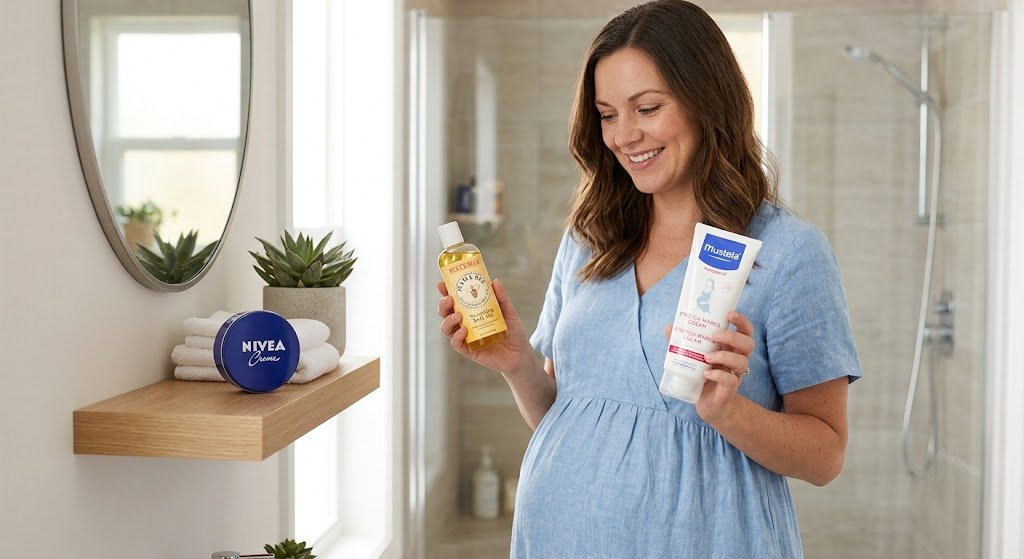
If you’ve found yourself asking, “I’m a pregnant woman. Are Nivea products safe compared to Burt’s Bees or Mustela?”, you’re not alone.
The short answer is:
Yes, many Nivea products are generally considered safe during pregnancy but not every product. The same applies to Burt’s Bees and Mustela. Safety depends more on the specific ingredients than the brand itself.
Some moisturizers contain only basic hydrating ingredients and are perfectly suitable during pregnancy. Others may include retinoids, high-strength salicylic acid, certain essential oils, or other ingredients that healthcare professionals commonly recommend avoiding.
This guide explains exactly how these three skincare brands compare, which ingredients matter most, and how to choose pregnancy-friendly products with confidence.
Why Pregnancy Changes Your Skincare Routine
Pregnancy hormones affect your skin in several ways:
- Increased dryness
- Greater sensitivity
- Hyperpigmentation (melasma)
- Stretch marks
- Acne breakouts
- Itching
- Changes in skin barrier function
At the same time, healthcare providers generally recommend minimizing unnecessary exposure to ingredients that could potentially affect fetal development.
Although most skincare products absorb only minimally into the bloodstream, pregnancy is a time when caution is encouraged especially with ingredients that have known safety concerns.
“I’m a pregnant woman. Are Nivea products safe compared to Burt’s Bees or Mustela?”
Here’s the quick comparison:
| Brand | Generally Pregnancy Safe? | Notes |
| Nivea | Yes, many products | Check ingredients individually |
| Burt’s Bees | Mostly yes | Natural doesn’t always mean pregnancy-safe |
| Mustela | Yes, especially maternity line | Specifically designed for mothers and babies |
The important takeaway is this:
No skincare brand is 100% pregnancy-safe across every product.
Always evaluate the individual product rather than assuming the entire brand is safe.
Ingredients That Are Generally Considered Safe During Pregnancy
Many everyday moisturizers contain ingredients dermatologists commonly consider low risk during pregnancy.
These include:
- Glycerin
- Shea butter
- Cocoa butter
- Petrolatum
- Mineral oil
- Panthenol
- Ceramides
- Hyaluronic acid
- Aloe vera
- Vitamin E
- Oat extract
- Dimethicone
These ingredients mainly work by improving hydration and supporting the skin barrier rather than entering the bloodstream in meaningful amounts.
Ingredients Pregnant Women Should Usually Avoid
Regardless of the brand, carefully check for these ingredients.
Retinoids
Avoid:
- Retinol
- Retinaldehyde
- Retinyl palmitate
- Tretinoin
- Adapalene
- Tazarotene
Vitamin A derivatives have the strongest evidence supporting avoidance during pregnancy.
High-Strength Salicylic Acid
Small amounts in cleansers are generally considered low risk.
However, high-concentration leave-on treatments and chemical peels should usually be avoided unless specifically recommended by your healthcare provider.
Hydroquinone
Hydroquinone has unusually high skin absorption compared with many cosmetic ingredients.
Many healthcare professionals recommend postponing its use until after pregnancy.
Certain Essential Oils
Some essential oils may not be recommended during pregnancy, particularly in concentrated leave-on products.
Examples include:
- Clary sage
- Wintergreen
- Pennyroyal
- Wormwood
- High concentrations of rosemary oil
Not every essential oil is dangerous, but caution is generally advised.
Formaldehyde-Releasing Preservatives
While less common today, some products may still contain preservatives that release formaldehyde over time.
Many pregnant women prefer avoiding them.
Are Nivea Products Safe During Pregnancy?
In general, many Nivea moisturizers are considered suitable for pregnancy because they focus on hydration rather than active anti-aging ingredients.
Common ingredients found in many Nivea moisturizers include:
- Glycerin
- Mineral oil
- Petrolatum
- Panthenol
- Vitamin E
These ingredients have long histories of cosmetic use.
However, not every Nivea product is identical.
Some specialized products—especially anti-aging serums or brightening treatments—may contain ingredients that deserve closer attention.
Examples include:
- Retinol
- Retinyl derivatives
- Strong exfoliating acids
Always review the ingredient list before purchasing.
Popular Nivea Products That Are Often Pregnancy-Friendly
Many women continue using products such as:
- Classic moisturizing cream
- Soft moisturizing cream
- Rich body lotion
- Basic hand creams
- Lip balms
These products generally emphasize moisture rather than potent treatment ingredients.
Still, formulations can vary by country, so checking the current label remains important.
Are Burt’s Bees Products Safe During Pregnancy?
Burt’s Bees has built its reputation around naturally derived ingredients.
Common ingredients include:
- Beeswax
- Shea butter
- Coconut oil
- Sunflower oil
- Honey
- Aloe vera
Many products are pregnancy-friendly.
However, “natural” does not automatically mean safer.
Some natural products contain:
- Essential oils
- Botanical extracts
- Fragrance blends
Certain essential oils may not be ideal during pregnancy, especially in high concentrations.
Natural ingredients can also trigger allergies or irritation.
Burt’s Bees Strengths During Pregnancy
Many expectant mothers appreciate:
- Gentle moisturizers
- Lip care
- Body lotions
- Belly butter
- Hand creams
The company generally avoids retinoids in many everyday moisturizing products.
Still, ingredient labels should always be checked.
Is Mustela Safe During Pregnancy?
Mustela is perhaps the brand most closely associated with pregnancy and newborn skincare.
The company offers products specifically designed for:
- Pregnancy
- Postpartum recovery
- Babies
- Sensitive skin
Many maternity products focus on:
- Stretch mark prevention
- Skin hydration
- Elasticity support
These products are often formulated with pregnancy in mind.
Why Many Pregnant Women Choose Mustela
Mustela maternity products typically prioritize:
- Minimalist formulas
- Gentle moisturizers
- Dermatologist testing
- Sensitive skin compatibility
Many contain:
- Avocado peptides
- Glycerin
- Plant oils
- Shea butter
Rather than relying on aggressive active ingredients.
Nivea vs Burt’s Bees vs Mustela
Let’s compare the three brands side by side.
| Feature | Nivea | Burt’s Bees | Mustela |
| Basic moisturizers | Excellent | Excellent | Excellent |
| Pregnancy-specific line | Limited | Some products | Extensive |
| Stretch mark products | Few | Available | Strong specialty |
| Sensitive skin | Good | Good | Excellent |
| Fragrance-free options | Some | Some | Several |
| Baby skincare | Good | Limited | Outstanding |
Which Brand Is Best for Dry Pregnancy Skin?
For very dry skin:
Nivea
Pros:
- Rich moisturizers
- Excellent barrier repair
- Affordable
- Widely available
Ideal for:
- Dry elbows
- Cracked hands
- Winter skin
- Dry legs
Which Brand Is Best for Natural Ingredients?
Burt’s Bees appeals to shoppers looking for:
- Plant-based ingredients
- Beeswax
- Botanical oils
- Naturally derived moisturizers
However, natural ingredients should still be evaluated individually.
Which Brand Is Best for Stretch Marks?
Mustela has become one of the better-known brands for:
- Stretch mark creams
- Stretch mark oils
- Pregnancy body care
Although no cream can guarantee prevention of stretch marks, regular moisturizing may improve skin comfort and elasticity.
Can You Use Fragranced Products During Pregnancy?
Many pregnant women develop increased sensitivity to scents.
Fragrance itself isn’t automatically unsafe.
However, strong fragrances may contribute to:
- Headaches
- Nausea
- Skin irritation
If your skin has become reactive, fragrance-free products may be a better choice.
How to Read Cosmetic Labels During Pregnancy
Instead of focusing on the front of the package, examine the ingredient list.
Look for:
✓ Glycerin
✓ Ceramides
✓ Hyaluronic acid
✓ Shea butter
✓ Petrolatum
✓ Panthenol
Be cautious with:
- Retinol
- Retinoids
- Hydroquinone
- High-strength salicylic acid
- Unfamiliar essential oil blends
Choosing the Right Pregnancy Moisturizer
When comparing products, prioritize:
- Hydration
- Minimal ingredients
- Fragrance-free if sensitive
- Dermatologist-tested formulas
- Products intended for sensitive skin
Expensive doesn’t necessarily mean safer.
The ingredient list matters far more than the price.
Tips for Building a Pregnancy-Safe Skincare Routine
A simple routine is often the best approach.
Morning
- Gentle cleanser
- Moisturizer
- Broad-spectrum sunscreen suitable for pregnancy
Evening
- Gentle cleanser
- Hydrating moisturizer
- Lip balm if needed
For dry body skin:
- Apply lotion immediately after showering
- Reapply on itchy areas throughout the day
Conclusion
If you’ve been asking, “I’m a pregnant woman. Are Nivea products safe compared to Burt’s Bees or Mustela?”, the evidence points to a reassuring answer: many products from all three brands are generally suitable during pregnancy, but no brand can be labeled entirely pregnancy-safe across every item in its lineup.
The safest approach is to judge each product by its ingredient list rather than relying on the brand name alone. Basic moisturizers from Nivea, naturally focused formulations from Burt’s Bees, and maternity-specific products from Mustela can all fit into a pregnancy skincare routine when they avoid ingredients commonly advised against, such as retinoids and high-strength salicylic acid.
For most expectant mothers, a simple routine centered on gentle cleansing, consistent hydration, and daily sun protection is more beneficial than using multiple active treatments. If you have a high-risk pregnancy, pre-existing skin condition, or questions about a specific product, discuss it with your obstetrician or dermatologist for advice tailored to your situation.
Ultimately, informed ingredient choices not marketing claims are the key to maintaining healthy, comfortable skin throughout pregnancy.
Frequently Asked Questions
Are all Nivea products safe during pregnancy?
No. Many basic moisturizers are generally considered pregnancy-friendly, but specialized anti-aging or treatment products may contain ingredients that warrant caution. Always check the ingredient list.
Is Burt’s Bees safer than Nivea?
Not necessarily.
Burt’s Bees uses many naturally derived ingredients, while Nivea often relies on classic moisturizing ingredients. Neither brand is universally safer than the other because safety depends on the individual formula.
Is Mustela the best brand for pregnancy?
Mustela offers one of the largest maternity skincare ranges and is specifically known for products designed for pregnant women and babies. However, that doesn’t automatically make every Mustela product the best choice for every individual.
Can I use Nivea Soft while pregnant?
Many women continue using Nivea Soft during pregnancy because it primarily functions as a moisturizer. However, ingredient formulations can differ by region, so reviewing the current ingredient list and consulting your healthcare provider if you have concerns is recommended.
Are stretch mark creams actually effective?
No cream can completely prevent stretch marks because genetics, skin type, weight gain, and hormones all play significant roles. Moisturizers can improve skin hydration, comfort, and elasticity but cannot guarantee prevention.
Should I avoid all skincare during pregnancy?
No.
Most basic cleansers and moisturizers are considered appropriate during pregnancy. The focus should be on avoiding a relatively small number of ingredients that are generally not recommended, rather than avoiding skincare altogether.