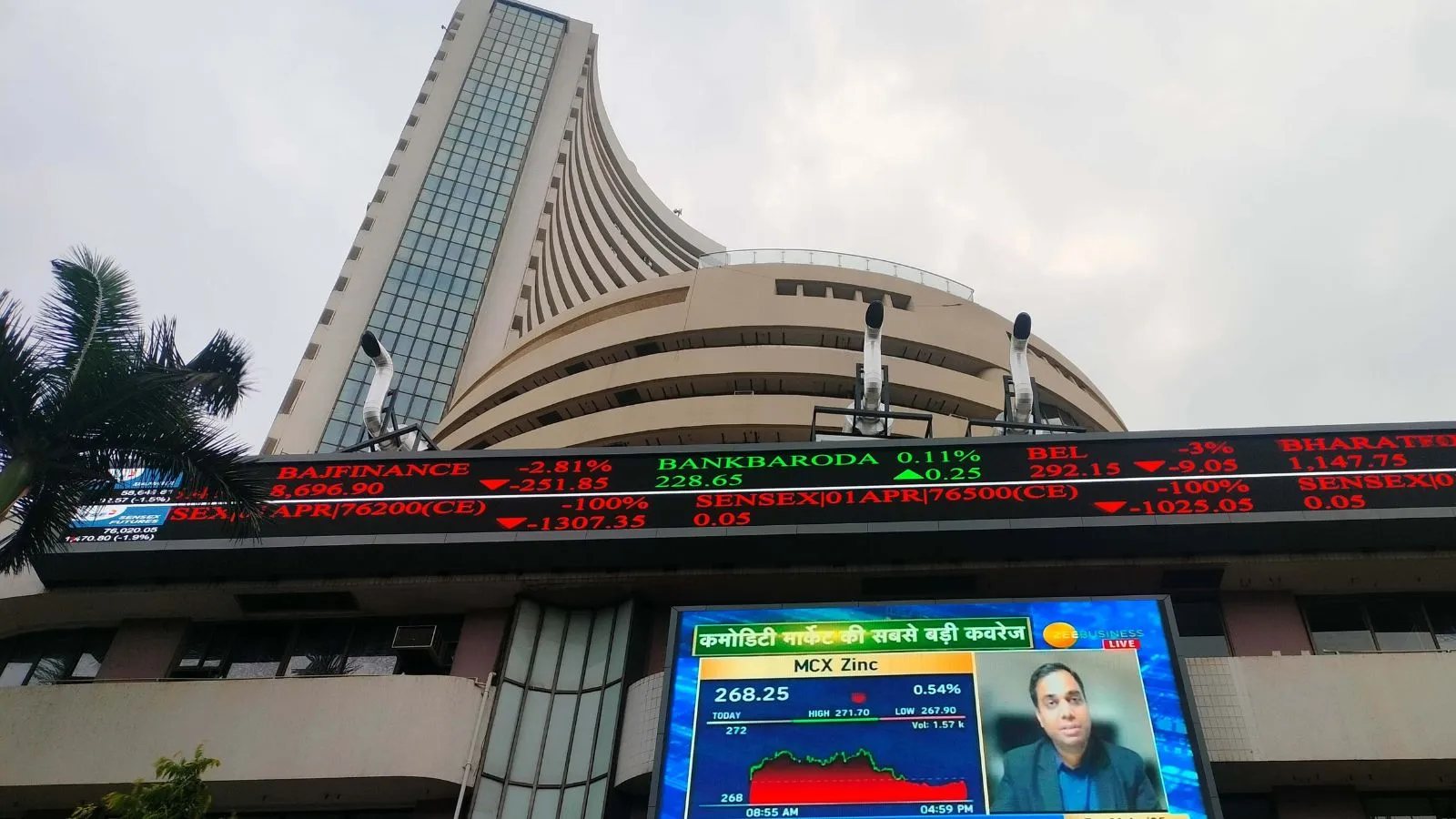

The Indian stock market has grown into one of the world’s most influential financial markets, attracting millions of investors from India and abroad. At the center of this growth is the Sensex, a benchmark index that reflects the performance of some of India’s largest and most established publicly traded companies. Whether someone is a beginner exploring investing or an experienced market participant, understanding this index is essential for making informed financial decisions.
The Sensex is often considered a barometer of the Indian economy because it tracks the share price movement of 30 financially strong companies listed on the Bombay Stock Exchange (BSE). When the index rises, it generally signals positive investor sentiment and confidence in the market. When it declines, it may indicate caution caused by economic uncertainty, global events, or company-specific developments.
Although the index cannot predict the future, it provides valuable insight into market trends and investor behavior. Financial news channels, analysts, fund managers, and retail investors closely follow its daily movements to understand the direction of India’s equity market.
This guide explains what the Sensex is, how it works, how companies are selected, what influences its movement, and why it remains one of the most important indicators in India’s financial system.
What Is Sensex
Sensex is the benchmark stock market index of the Bombay Stock Exchange, commonly known as the BSE.
The name combines the words “Sensitive” and “Index.” It was introduced in 1986 to measure the overall performance of leading companies listed on the exchange.
Instead of tracking every listed company, the index follows 30 large and well-established businesses representing different sectors of the Indian economy. These companies are selected because of their market capitalization, liquidity, financial strength, and industry representation.
Since these businesses belong to different sectors such as banking, information technology, automobiles, healthcare, consumer goods, energy, and financial services, the index provides a broad picture of market performance rather than reflecting the movement of a single industry.
For investors, the index serves as a quick indicator of whether the overall market is gaining or losing value during a trading session.
Sensex Quick Overview
| Category | Details |
|---|---|
| Full Name | BSE Sensitive Index |
| Exchange | Bombay Stock Exchange |
| Introduced | 1986 |
| Number of Companies | 30 |
| Index Type | Free-float market capitalization weighted |
| Covers | Large-cap companies |
| Currency | Indian Rupee (INR) |
| Primary Purpose | Measure overall market performance |
This simple structure makes the index easy to understand while providing valuable information about the broader equity market.
History of Sensex
Before benchmark indices became widely available, investors had limited ways to measure overall market performance.
The Bombay Stock Exchange introduced the index in 1986 to provide a reliable benchmark for India’s growing equity market.
Initially, the base year was set as 1978–79 with a base value of 100.
Over the following decades, India’s economy experienced significant transformation. Economic reforms, globalization, technological advancements, and increasing investor participation contributed to substantial growth in the stock market.
As the economy expanded, the companies included in the index also evolved.
Some businesses left the index due to changing market conditions, while stronger companies entered after demonstrating consistent growth and higher market value.
This periodic review ensures that the index continues representing the country’s leading listed businesses.
Today, it remains one of India’s most recognized financial indicators.
How Sensex Works
Many new investors believe the index simply calculates the average share prices of its companies.
In reality, the calculation is much more sophisticated.
The index uses the free-float market capitalization methodology.
Market capitalization refers to the total market value of a company’s outstanding shares.
However, not every share is freely available for trading.
Promoter holdings, government ownership, and certain strategic investments are generally excluded because they are not actively traded in the market.
Only the shares available for public trading are considered when calculating the index.
As a result, larger companies with higher free-float market capitalization have a greater influence on daily movements than smaller companies.
If one major company records a significant price increase, it can move the overall index even when several smaller companies remain unchanged.
This methodology allows the index to better reflect actual investor activity.
Companies Included in the Index
The companies included in the index represent different sectors of the Indian economy.
This diversification helps reduce the impact of weakness in any single industry.
Some of the sectors commonly represented include:
- Banking and financial services
- Information technology
- Oil and energy
- Consumer goods
- Automobiles
- Pharmaceuticals
- Telecommunications
- Metals
- Power
- Industrial manufacturing
The list of companies is reviewed periodically.
If another business becomes more representative of the Indian economy, changes may be made to maintain the index’s relevance.
Because only 30 companies are included, selection standards remain extremely high.
Most constituents are industry leaders with long operating histories and significant market capitalization.
Why Sensex Matters to Investors
The index plays an important role in helping investors understand overall market conditions.
Rather than studying hundreds of individual companies every day, investors can observe the movement of the benchmark to gain an overview of market sentiment.
When the index rises steadily, investor confidence is often improving.
When it falls sharply, uncertainty may be increasing because of domestic or global events.
Institutional investors also compare portfolio performance against benchmark indices.
If a mutual fund consistently performs better than the benchmark, it may indicate effective investment management.
The index also serves as a reference point for exchange-traded funds (ETFs), index funds, and other investment products designed to replicate market performance.
For long-term investors, monitoring the benchmark provides perspective instead of reacting to short-term movements in individual stocks.
Factors That Influence Sensex
Several economic and financial factors affect daily movements in the index.
Corporate earnings are among the most important.
When large companies report better-than-expected profits, investor confidence often improves.
Interest rate decisions made by the Reserve Bank of India also influence market sentiment.
Lower interest rates may encourage borrowing and business expansion, while higher rates can reduce spending and investment.
Inflation is another important factor.
Persistent inflation can increase business costs and reduce consumer purchasing power, affecting company earnings.
Global events also play a significant role.
International economic conditions, geopolitical developments, crude oil prices, and currency fluctuations can influence investor decisions in Indian markets.
Foreign Institutional Investors (FIIs) and Domestic Institutional Investors (DIIs) also contribute significantly to market direction through their buying and selling activity.
Because these investors manage large amounts of capital, their trading decisions often affect short-term market trends.
Sensex Versus Nifty 50
Many beginners wonder whether the index and Nifty 50 are the same.
Although both measure the Indian stock market, they are different benchmark indices.
| Feature | Sensex | Nifty 50 |
| Stock Exchange | BSE | NSE |
| Number of Companies | 30 | 50 |
| Introduced | 1986 | 1996 |
| Exchange | Bombay Stock Exchange | National Stock Exchange |
Both indices generally move in similar directions because they include many of India’s largest companies.
However, differences in company composition and weighting can produce slightly different performance over shorter periods.
For most investors, both indices provide valuable information about India’s overall equity market.
Advantages of Following Sensex
Tracking the Sensex offers several benefits for both new and experienced investors. Since it represents some of India’s largest listed companies, it provides a quick overview of market performance without requiring investors to monitor hundreds of individual stocks.
One of the biggest advantages is diversification. The companies included in the index belong to multiple industries, reducing the impact of poor performance in a single sector. If one industry experiences temporary weakness, stronger performance in another sector may help balance the overall index.
The benchmark also serves as an important reference for investment decisions. Mutual fund managers often compare their returns against it to evaluate whether they are outperforming or underperforming the broader market.
Long-term investors can use the index to understand historical market trends rather than focusing only on short-term price fluctuations. While daily movements attract media attention, successful investing often depends on maintaining a long-term perspective.
Another advantage is transparency. The methodology used to calculate the index follows clearly defined rules, allowing investors to understand how companies are selected and how the benchmark is maintained.
Limitations of Sensex
Although the Sensex is an excellent indicator of market performance, it has certain limitations.
The benchmark includes only 30 companies. While these businesses are among India’s largest, they cannot fully represent every listed company or every sector of the economy.
Smaller and mid-sized businesses, which may experience faster growth, are generally not included. As a result, some parts of the market may perform differently from the index.
Another limitation is that large companies have a greater influence on index movements because of the free-float market capitalization methodology. Significant changes in a few large companies can affect the benchmark even if many other stocks remain relatively stable.
Investors should also remember that the index measures market performance rather than the overall economy. Economic growth, employment, industrial production, and consumer spending do not always move in the same direction as stock prices.
For this reason, investment decisions should never rely solely on the benchmark.
Major Milestones in Sensex History
The history of the Sensex reflects India’s economic transformation over several decades.
Since its launch in 1986, the benchmark has crossed numerous psychological milestones that attracted attention from investors worldwide.
Moving above 10,000 points demonstrated the rapid expansion of India’s economy during the early 2000s.
Later, the benchmark crossed 20,000, 30,000, 40,000, 50,000, and 60,000 points as corporate earnings, economic reforms, and investor participation continued to grow.
Each milestone represented increased confidence in India’s long-term economic potential.
However, the journey has not always been smooth.
Global financial crises, economic slowdowns, pandemics, geopolitical tensions, and periods of market volatility have all contributed to temporary declines.
Despite these challenges, the benchmark has historically demonstrated resilience over the long term, highlighting the importance of patience in equity investing.
Investment Options Linked to Sensex
Investors do not necessarily need to purchase shares of all 30 constituent companies individually.
Several investment products are designed to follow the performance of the benchmark.
Index funds are among the most popular options. These mutual funds aim to replicate the composition and returns of the index while keeping management costs relatively low.
Exchange-Traded Funds (ETFs) provide another convenient method of investing. They trade on stock exchanges like ordinary shares while tracking benchmark performance.
Some retirement plans and long-term investment portfolios also include index-based products because of their diversification and comparatively lower expense ratios.
Investors should evaluate their financial goals, investment horizon, and risk tolerance before choosing any investment product.
Professional financial advice may also be helpful for individuals developing a long-term investment strategy.
Common Mistakes New Investors Make
Many beginners misunderstand how the Sensex should be used.
One common mistake is assuming that a rising benchmark guarantees profits for every stock. Individual companies can perform very differently depending on their financial results and business conditions.
Another mistake is reacting emotionally to daily market movements.
Short-term volatility is a normal feature of equity markets. Making investment decisions based on fear or excitement often leads to poor long-term results.
Some investors also believe they must buy shares only because the benchmark reaches a new high.
In reality, every investment decision should be based on careful research, company fundamentals, valuation, and personal financial objectives.
Ignoring diversification is another common error.
Even though the benchmark itself is diversified, investors should ensure their overall portfolio matches their own financial goals rather than concentrating excessively in one sector or investment type.
Future Outlook
India remains one of the world’s fastest-growing major economies, and this creates long-term opportunities for listed companies.
Rapid urbanization, digital transformation, infrastructure development, manufacturing expansion, and increasing consumer demand continue supporting business growth across multiple sectors.
As industries evolve, the companies included in the benchmark may also change to reflect the changing structure of the Indian economy.
Technology, renewable energy, healthcare, financial services, and manufacturing are expected to remain important contributors in the coming years.
Although short-term volatility will always be part of investing, many analysts believe India’s expanding economy provides a positive long-term environment for quality businesses.
Investors should remember that no benchmark rises continuously. Market corrections are a normal part of investing and often provide valuable learning opportunities for long-term participants.
Maintaining discipline, diversification, and patience remains essential regardless of market conditions.
Final Thoughts
The Sensex is much more than a number displayed on financial news channels. It is one of India’s most trusted stock market benchmarks and reflects the performance of 30 leading companies listed on the Bombay Stock Exchange.
Over the years, the Sensex has become an important indicator of investor confidence, corporate performance, and overall market sentiment. While it cannot predict future returns, it provides valuable insight into the direction of India’s equity market.
Understanding how the benchmark is calculated, what influences its movement, and how investors use it can help individuals make better financial decisions. Whether someone invests directly in shares, mutual funds, or exchange-traded funds, knowledge of the Sensex forms an essential foundation for long-term investing.
Successful investing ultimately depends on research, patience, diversification, and disciplined decision-making rather than reacting to short-term market fluctuations. By combining these principles with a clear understanding of market benchmarks, investors can build stronger and more informed investment strategies.
Frequently Asked Questions
1. What is Sensex?
Sensex is the benchmark stock market index of the Bombay Stock Exchange that tracks the performance of 30 leading publicly listed companies in India.
2. How many companies are included in Sensex?
The index consists of 30 large-cap companies representing different sectors of the Indian economy.
3. How is Sensex calculated?
It is calculated using the free-float market capitalization methodology, which considers only shares available for public trading.
4. What is the difference between Sensex and Nifty 50?
Sensex tracks 30 companies listed on the Bombay Stock Exchange, while Nifty 50 follows 50 companies listed on the National Stock Exchange.
5. Can beginners invest through Sensex?
Yes. Beginners can gain exposure through index funds or ETFs that are designed to track the performance of the benchmark instead of purchasing all constituent stocks individually.